Student Jobs in Korea: Banned Fields Matter Most (Our Take, Nov 2026)
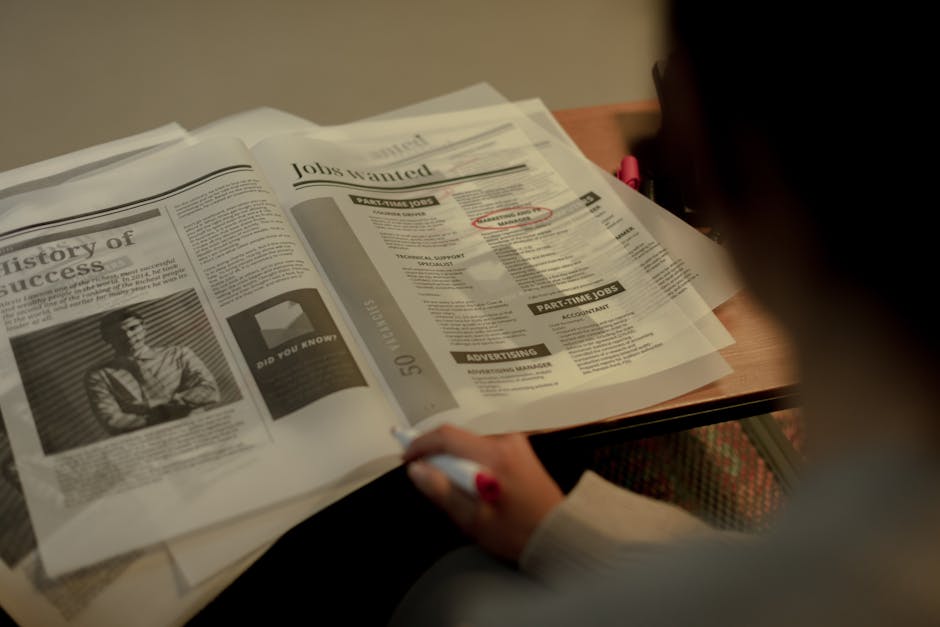
What changedThis is an opinion piece. On October 30, 2026, the Ministry of Justice said students caught working illegally in restricted fields such as delivery will, in principle, be deported or given a departure order regardless of how many times they have been caught. Our view is that this makes the list of banned job types the part-time work rule students most need to know.
WhenThe standard was decided on October 29 and announced on October 30, 2026. No start date was announced. Facts below were re-checked on November 2, 2026, Korea time.
Who it affectsInternational students in Korea (D-2) and, depending on how the ministry applies it, language trainees (D-4) who work or plan to work part-time.
Our view: for student jobs in Korea, the list of banned fields now matters more than the hour limits or the paperwork. Under the standard announced on October 30, one shift delivering food could, in principle, end a stay; no start date was given. For other permit breaches, the published guidance describes fines and refusals of future permits, although the Immigration Act allows removal for any breach of a student's activity limits (Art. 46(1)8). The facts below come from the official sources listed at the end. The ranking is our judgment, and this page does not decide anyone's case.
What the rules say now, and what the ministry has announced
Three documents set the picture: the ministry's stay guidance manual, the October 30 decision and the October 7 student visa plan.
| Ministry manual (part-time work section) | October 30, 2026 decision | October 7, 2026 plan | |
|---|---|---|---|
| Status | Undated excerpt posted by a university on April 28, 2026; we could not confirm it is the latest edition | Announced; no start date | Plan; targets from late 2026 to 2028 |
| Banned work | Delivery agency riders, couriers, designated drivers, insurance agents, home-visit tutors and sellers; dispatch or subcontracted work; work far from home or school; businesses registered for construction or manufacturing (manufacturing allowed with TOPIK 4 or KIIP stage 4) | "Delivery, adult entertainment and other fields where employment is restricted" | Tourist accommodation to be allowed as an exception |
| First offense in a banned field | Construction only: departure order on the first offense, "regardless of the number of offenses" | Deportation or departure order "in principle", regardless of the number of offenses | Not covered |
| Who can work legally | Permit needed before the first shift; hours depend on degree level and Korean ability | No change | Korean level becomes the main test; after a one-year grace period, from about 2028 no part-time work without a score such as KIIP stage 3 |
The manual says the permit must come before the work, and a new permit is needed before moving to a different employer. A D-2 permit lasts up to one year, for at most two workplaces at once. Study in Korea, the government's study portal, gives the example of a student who worked at a restaurant without a permit: that breaches Article 18(1) of the Immigration Act, with a fine of up to 30 million won.
Enforcement was already heavy before October. From January to May 2026 the ministry caught 734 foreigners delivering illegally, 410 of them (56%) on D-2 student visas. It removed 68 people, including by deportation, and fined 643 between 1 million and 10 million won each (our post on the October 30 decision).
Why we rank the banned list first
Our test is the size of the downside. In our view, a rule deserves a student's attention first when breaking it once can end the stay.
- The cost of a mistake is now asymmetric. Working at a restaurant without a permit is still a breach of the Act, with a fine of up to 30 million won, and the Act allows removal for it too. But the manual excerpt we read only names construction as a first-offense removal field, and the October 30 decision adds delivery and adult entertainment to that kind of treatment. We think that gap is now the single biggest risk in student work.
- Delivery is where students are being caught. More than half of the riders caught in January to May held student visas. The manual lists delivery agency riding as a restricted form of work in itself, so a permit for a restaurant job does not make a delivery shift legal.
- The banned list is longer than "delivery". The manual's list includes designated driving, courier work, door-to-door sales and dispatch work. The October 30 release says "and other" restricted fields. We think a student should assume the stricter outcome may reach any of them until the ministry says otherwise.
This is a judgment about priorities, not about whether the policy is right. We take no view on that.
Where we could be wrong: Korean level may matter more by 2028
The strongest objection is the October 7 plan (our post). The ministry plans to make Korean ability the main condition for a work permit.
Its Q&A says that after a one-year grace period, from about 2028, students without a score such as KIIP stage 3 could not work part-time at all. In our view, that could affect access to legal work far more broadly than the delivery standard, although the ministry gives no estimate of how many students it would exclude. We think Korean level may be the bigger long-run question for a first-year student today.
Two more points cut against us. The October 30 standard says "in principle" and has no start date, so its real reach is unknown. And the banned list itself is not new: delivery was already off-limits under the manual. What changed is the consequence, not the rule.
So our ranking has a footnote: the banned list first, because a single mistake there is the hardest to undo, and Korean level a close second, because it decides who can work legally at all from about 2028.
What students can check this week
- Put every job you do or plan to do against the banned list. If it is paid per delivery or task, found through an agency or app, or registered as construction or manufacturing, ask your university's international office before you start.
- Get the permit before the first shift, and a new one before switching employers. Government24 lists no application fee and processing within 14 days, usually within three.
- Never ride on someone else's account. The October 30 plan targets account sharing and the shops that arrange it.
- Start on Korean now if you plan to work after 2027. KIIP stage 3 is the example level in the plan.
- If you have already been caught, get advice before you sign or pay anything. Call 1345 (Immigration Contact Center, multilingual) or talk to a lawyer or your school.
For other 2026 changes to stays and visas, see Korea Visa and Stay Rules: Where Each Change Stands (Updated 2026-11).
What we don't know yet
- When the October 30 standard starts, and whether it is already in use.
- Which fields count as "restricted" under the new standard beyond delivery and adult entertainment, and whether language trainees (D-4) are covered.
- What "in principle" allows, for example for a student misled by an employer.
- Whether the ministry will publish a revised manual. The edition we read names only construction as a first-offense removal field.
- How long a removed student is barred from coming back. The release does not say. The Immigration Act lets the Justice Minister refuse entry to someone who left under a deportation order less than five years earlier (Art. 11(1)6). That provision names deportation orders, not departure orders, and the ministry has not said how it will apply either to students.
- Exact dates for the Korean-level permit rule. The plan gives half-year targets, and the Q&A gives about 2028 for the cut-off.
Related changes
- Korea G-1-3 Visa for Paternity Suits (Nov 2026): Stay and Work Rules
- E-2 Visa Drug Test Adds MDMA and Ketamine (Nov 2026): Who It Covers
- Korea Visa and Stay Rules: Where Each Change Stands (Updated Nov 2026)
Last verified: 2026-11-02
Sources
- Ministry of Justice et al. joint press release, "Government-wide joint response to prevent illegal activity by foreigners" (2026-10-30; hwpx read), via korea.kr (in Korean)
- Ministry of Justice press release on the international student visa strategy, with Annex 1 (strategy and schedule) and Annex 2 (Q&A) (2026-10-07; hwpx read), via korea.kr (in Korean)
- Ministry of Justice press release, 734 foreign delivery riders caught in five months (2026-07-06; hwpx read), via korea.kr (in Korean)
- Study in Korea (Korean government portal), employment rules and violation examples for international students (in Korean)
- Government24, part-time work permission for students (D-2) and language trainees (D-4-1) (in Korean)
- law.go.kr, Immigration Act, version in force from 2026-10-02, Arts. 11 and 46 (in Korean)
- Ministry of Justice stay guidance manual, D-2 section on part-time work (pp. 35-40; edition not stated), as attached to an Incheon National University notice of 2026-04-28 (in Korean)
How this page is made: researched and compiled from the official Korean-language sources listed above, and fact-checked by The Changelog Editor, a native Korean speaker based in Korea, who verifies all key dates, requirements, and legal citations before publication.
Korea Changelog explains official announcements in plain English. It is not legal, immigration, tax, or financial advice. Rules change, and when this page and the official source disagree, the official source is right — check it, or call the Korea Immigration Contact Center at 1345 (multilingual), before you act.


Comments
Post a Comment